Shopify Subscription Trends 2026 Every Merchant Should Know
- Updated: September 4, 2026
Table of Contents
Recharge just spent $105 million to buy one of its biggest competitors, Skio. That single deal is the real story behind shopify subscription trends 2026, not the generic prediction lists floating around right now. If you sell on Shopify with any kind of recurring order setup, this changes the ground you’re building on.
You’re about to get two things here. First, what the Recharge-Skio acquisition actually means for your store, whichever subscription app you run. Second, fresh 2026 benchmark data pulled from real subscriber behavior across thousands of brands, numbers you probably haven’t seen yet.
Every trend below comes with a real, named source attached to it. No vague labels, no unattributed stats. Just what’s actually happening, and what you should do about it.
What Changes After the Recharge Skio Acquisition
On April 30, 2026, Recharge acquired Skio in an all-cash deal worth $105 million. Both companies are subscription infrastructure providers for Shopify stores, which means this wasn’t a small tuck-in acquisition. It was one of the two biggest independent players in the space absorbing the other.
If you run your subscription program on Recharge or Skio, the immediate question is simple: is Recharge safe after acquiring Skio? For now, yes. Existing Recharge merchants shouldn’t expect disruption to their current setup, and Skio customers will likely see a migration path onto Recharge’s platform over time.
Neither company has published a hard timeline for that transition yet. That gap is worth watching if you’re on Skio today.
But here’s the part getting less attention. This deal isn’t really about Recharge and Skio alone. It’s a signal about where the entire subscription-app market is heading.
Before this acquisition, the space had a handful of independent players competing for the same merchants: Recharge, Skio, Bold, PayWhirl, Smartrr, and a few smaller names. Now one of those seats is empty.
If you’re running your store on Bold, PayWhirl, or Smartrr, this is worth watching closely. Not because your app is going anywhere tomorrow, but because consolidation tends to keep going once it starts. Fewer independent options usually means less pricing pressure and slower feature competition across the board, even for the apps that don’t get acquired.
That’s the real shift here. Not one transaction, but the direction the whole category is moving in.
Why Shopify Subscription Trends in 2026 Are More Than Hype
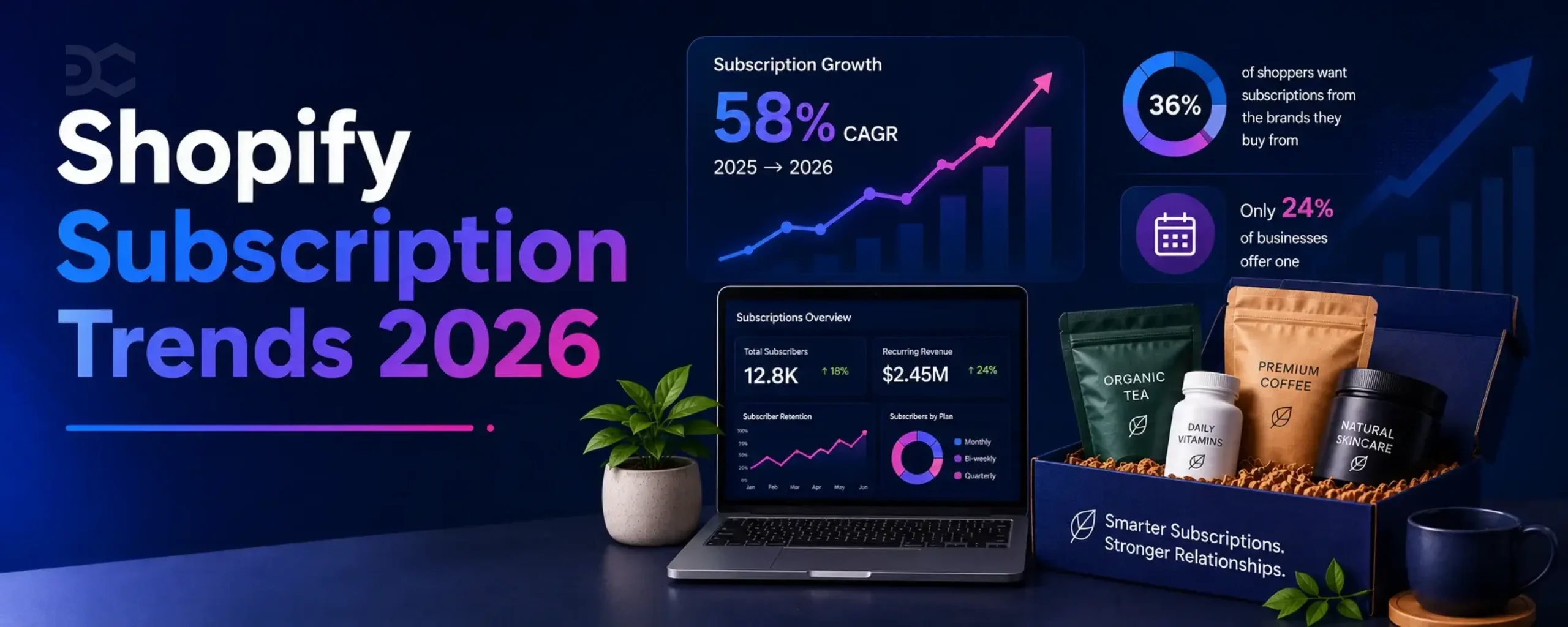
Is subscription commerce just a passing trend, or a permanent shift in how people buy? The market size alone answers that question. Subscription e-commerce is on track to grow from $536.72 billion in 2025 to $859.52 billion in 2026, a 58% compound annual growth rate that few retail categories can match right now.
But growth alone doesn’t tell you where the opportunity sits. Here’s what does: 36% of shoppers say they want product subscriptions from the brands they buy from, yet only 24% of businesses actually offer one. That’s a real gap between what customers want and what most stores are set up to deliver, and it hasn’t closed yet.
Recharge’s Subscription Trend Report 2026, built on benchmark data across 20,000 brands, adds specifics to that gap. Subscription checkouts grew 16% year-over-year compared to one-time purchases. Same-day cancellations dropped 35%, a sign that subscribers who commit are sticking around longer than they used to.
There’s a catch worth noting too. First-order discounts rose 18% over the same period, meaning it’s getting more expensive to win that first subscriber even as the ones who stay are staying longer. Growth and rising acquisition cost are happening at the same time.
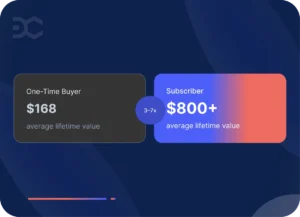
That combination changes the math on subscriber lifetime value, and it’s worth understanding how that value compares to a typical one-time buyer before you decide how much to invest in acquisition.
5 Shopify Subscription Trends Backed by Real Data
You’ve probably scrolled past subscription trend lists before, the kind stacked with buzzwords and no proof behind them. Here’s a different version: five shifts happening in subscription commerce right now, each one backed by a real number and a named source, not a guess.
Why Subscriber Retention Beats Acquisition in 2026
Subscribers place roughly three times more orders than one-time shoppers, according to Recharge’s 2026 benchmark data. That single number should change how you think about subscriber retention in 2026.
Every subscriber you keep already outperforms most of what a new one-time sale is worth. Acquiring new traffic gets more expensive every year, while a retained subscriber gets more valuable simply by staying subscribed. That shift is exactly why subscriber retention in 2026 matters more than another round of acquisition spend.
Chewy is a public company, which means its numbers are disclosed, not estimated. According to Chewy’s own investor disclosures, Autoship subscriptions now make up over 77% of total net sales, with net sales per active customer topping $565, credited directly to recurring revenue and higher lifetime value compared to one-time purchasers.
If most of your customer base still buys once and disappears, more ad spend isn’t the fix for that. Giving those buyers a real reason to move from a single purchase to a subscription closes that gap faster than any new campaign will.
The Fast Cheap Fix for Involuntary Churn
Not every subscriber who leaves does it on purpose. Between 20% and 40% of subscription churn is involuntary, meaning it comes down to a declined card, an expired card, or a bank flagging the charge, not a customer deciding to quit.
That’s the cheapest churn to fix, because the subscriber never chose to leave in the first place. A short retry window and a simple card-update reminder recover a real share of that number without touching pricing, product, or anything else about your offer.
It’s a small fix with an outsized payoff, and it’s worth solving before chasing bigger, harder problems.
Subscription Flexibility Is the New Baseline
Pause. Skip. Swap. If your subscription program can’t do at least one of those without a support ticket, you already have a flexibility problem.
This isn’t about adding one more feature. It’s about removing the friction that pushes a subscriber toward the cancel button in the first place.
Recharge’s 2026 data shows same-day cancellations dropped 35% year-over-year, and the biggest driver behind that number is control. When subscribers can adjust an order themselves instead of emailing support or cancelling out of frustration, they stay subscribed longer.
This isn’t a nice-to-have anymore. It’s the baseline customers expect the moment they sign up, and it means a self-serve portal now carries as much weight as your product itself.
Getting delivery timing right plays into this too. A subscriber who feels stuck with the wrong schedule cancels. One who can adjust it rarely does.
Why Tiered Subscription Pricing Models Are Winning in 2026
Flat subscribe-and-save pricing is quietly becoming the exception, not the rule. More subscription programs are shifting toward tiers, where higher-spending subscribers unlock more value instead of everyone paying the same flat rate.
The pattern shows up clearly in loyalty and retention data: subscribers on a VIP or top tier generate meaningfully higher average order value than non-tier customers, often in the range of 70% higher, and purchase noticeably more often across the year, closer to 3 to 4 times the frequency of a standard subscriber.
| Standard tier | VIP / top tier | |
|---|---|---|
| Average order value | Baseline | ~70% higher |
| Purchase frequency | Baseline | ~3-4x higher |
That gap isn’t small. It’s the difference between a subscriber who orders occasionally and one who’s built real habit and loyalty around your brand. On a platform where average order value already drives most profitability decisions, a lift that size changes the math on what a single subscriber is worth.
Tiering works because it gives subscribers something to grow into. A basic plan gets someone in the door, but a mid or top tier gives them a reason to spend more without you having to run a discount to get there. That’s a very different lever than the acquisition discounts that are already getting more expensive, as the earlier benchmark data shows.
If you’re not running tiers yet, bundling products together is often the easiest first step, since it naturally creates a “more for more” structure without rebuilding your entire pricing page. Pairing that with upsell and cross-sell prompts at checkout gives subscribers a visible path from one tier to the next, instead of leaving them to figure it out alone.
This is the clearest ROI move here, and it’s the one worth prioritizing first if you’re only fixing one thing this quarter.
Consolidation Pressure on Independent Subscription Apps
Skio vs Recharge 2026 was the framing most people used when the deal broke. That framing missed the bigger point.
With Skio folded into Recharge, the independent subscription-app space just got smaller. Loop and Stay.ai are now the largest players left standing outside Recharge’s ecosystem, and both are likely to see more attention from merchants who want an alternative. Neither has Recharge’s scale yet, but scale is exactly what shifts fastest after a deal like this one.
That doesn’t mean you need to switch anything today. But fewer independent options usually means slower feature competition and less pricing pressure across the entire category, not just for the two companies that merged.
If you’re comparing subscription apps right now, it’s worth widening the list beyond the two names everyone’s talking about.
If You’re Just Starting a Subscription Program
Do you need a multi-tier subscription model on day one? No. Start simple, prove the model works, then add complexity once you have real subscriber data to build tiers around.
Here’s what actually matters before you launch:
- Get the foundation right first – A clear plan for starting your subscription business on Shopify beats a fast launch with no structure behind it.
- Plan for acquisition costs upfront, not after – First-order discounts rose 18% year-over-year, according to Recharge’s 2026 benchmark data. That means getting your first subscribers costs more than it used to, so budget for it rather than getting surprised by it three months in.
- Lower the barrier to that first “yes” – A well-structured free trial often converts hesitant buyers better than a discount does, and it doesn’t erode your margin the same way.
- Choose payment infrastructure built for recurring billing – Not every gateway handles retries and failed payments the same way, and the right payment gateway now matters more than people realize.
Tiers can wait. Getting these four right can’t.
If You Already Run a Subscription Program
Should you switch subscription apps in 2026 because of everything happening in the market right now? Probably not yet, and definitely not before you know what’s actually causing your churn.
Before reacting to any trend in this post, run one audit first: pull your cancellations from the last 90 days and split them into two buckets. Voluntary, subscribers who chose to leave. Involuntary, payments that failed on their own. Most stores have never actually separated the two, and the fix for each one is completely different.
If most of your churn is involuntary, no new app, no pricing change, and no trend chasing will fix that. You need better retry logic and payment recovery, not a platform switch.
If it’s voluntary, the reason usually shows up earlier than people expect. Understanding why subscribers drop off in the first 90 days will tell you more than any acquisition update will.
Either way, check your setup against the most common subscription mistakes before you touch anything else. Most of the time, the fix is already inside your current app. The trend isn’t the problem. Not knowing your own numbers is.
Shopify Subscription Trends 2026 FAQ
Is Recharge still safe to use after acquiring Skio?
Yes. The acquisition doesn’t disrupt Recharge’s existing platform or its current merchants. Skio customers will likely move onto Recharge’s infrastructure over time, though no official migration timeline has been published yet.
What’s the biggest subscription trend for small Shopify merchants in 2026?
Retention economics matters more than acquisition right now. Subscribers already place roughly three times more orders than one-time shoppers, so keeping the subscribers you have outperforms most new acquisition spend, especially as first-order discounts keep climbing.
How much of subscription churn is involuntary?
Between 20% and 40% of subscription churn is involuntary, meaning it comes from a declined or expired card rather than a subscriber choosing to leave. That makes it one of the cheapest churn problems to fix, since better payment retry logic recovers a real share of it without touching pricing or product.
Do I need a multi-tier subscription model?
Not right away. Start with a simple, single-tier offer, prove subscribers stick around, then introduce tiers once you have real data on who’s spending more and why.
Is subscriber behavior actually improving in 2026?
Yes, on the numbers that matter most. Recharge’s 2026 benchmark data shows subscription checkouts up 16% year-over-year and same-day cancellations down 35%, both signs that subscribers who commit are staying longer. First-order discounts are up 18% too, so behavior is improving, but it’s costing more to earn that first commitment.
None of this is really about which app wins or which trend gets the most attention this year. It’s about whether your subscribers keep choosing to stay, month after month, regardless of what’s happening in the market around you.
That’s the part still entirely in your control.
The stores that come out ahead in 2026 won’t be the ones that reacted fastest to the Recharge-Skio news. They’ll be the ones that used this moment to actually look at their own numbers, fix what’s quietly leaking revenue, and built something subscribers don’t want to leave.
Most of that leak isn’t dramatic. It’s a card that expired, a retry that never happened, a subscriber who wanted to stay but got cancelled anyway. Driftcharge is being built to catch that before it costs you the subscriber.

Ganesh Pawar


Join the waitlist now
Limited early access. Early joiners receive additional discounts on premium features.
Discover how


You may also like
September 16, 2026
10 Best Shopify Trust Badge Apps in 2026 to Boost Conversions
March 1, 2026
Best Buy Now Pay Later Apps for Shopify in 2026