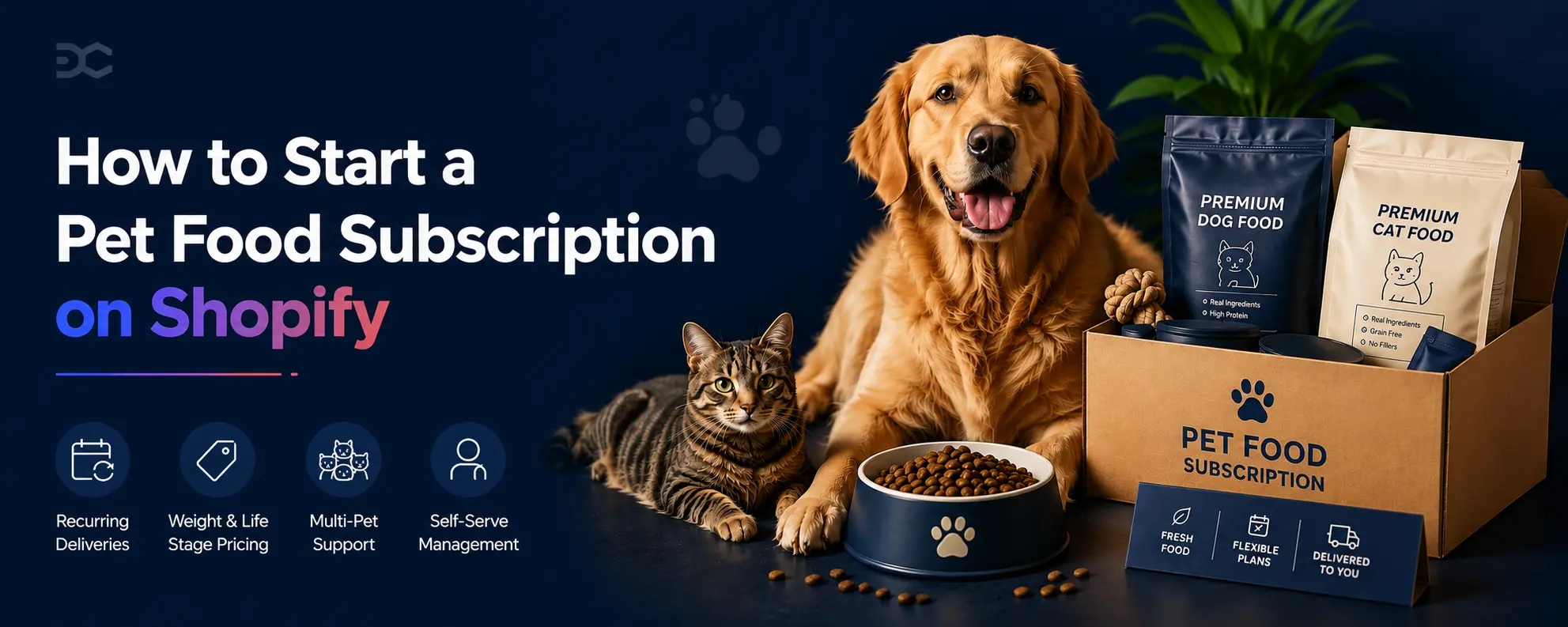
How to Start a Pet Food Subscription on Shopify
- Updated: June 25, 2026
Table of Contents
Most pet food subscriptions don’t lose customers because the food was bad. They lose them because the puppy that started on a small bag grew into a 70-pound adult eating twice as much, and the subscription never adjusted.
That is the part most people miss when they start one. A pet food subscription isn’t tied to a customer. It’s tied to a pet, so the price moves with the pet’s weight, the product changes with its life stage, and the frequency follows its appetite.
Get that right and the math works in your favor. More than half of US pet owners already use a subscription for some pet-related purchase, so the buying habit is there waiting for you. Once a dog or cat settles on a formula, switching brands risks an upset stomach, so your subscribers have a real reason to stay.
A pet food subscription delivers dog or cat food to a customer on a repeating schedule, billed automatically, with no need to reorder. The customer picks the delivery frequency and can pause, skip, or swap from a self-serve portal, while the store earns predictable revenue from every renewal.
Learning how to start a pet food subscription on Shopify the right way means planning for a customer whose needs change every few months. That shift is where both the revenue and the churn live.
Why Pet Food Is the Best Product to Sell on Subscription
US pet owners spent $152 billion on their animals in 2024, and that climbed to $158 billion in 2025. Pet food and treats are the biggest slice by far, at $65.8 billion and more than 40 percent of everything spent on pets. The category is expected to reach $78 billion by 2030.
That spending barely flinches in a downturn. People treat pets as family now, and feeding the family is the last line anyone cuts. For you, that means demand that holds steady even when discretionary categories wobble.
More of the money moves online each year. A growing share of pet owners now buy food on the internet rather than hauling bags home from a store, and recurring orders are taking a bigger cut of that every season.
What actually makes pet food work for subscriptions is timing. A dog empties a bag every three to four weeks, a cat every two to three. You are not guessing when the next order should arrive, because the pet’s bowl sets the schedule for you.
Then there is a kind of loyalty most products never earn. Vets warn owners against switching a pet’s food suddenly, so once someone finds a formula their dog does well on, they stop shopping around. That reluctance pays you back at every renewal.
One of the fastest-growing corners of the market is fresh food. A wave of brands has built entire companies on cooked, refrigerated meals sent out on repeat, which is about as close to a pure subscription product as pet food gets. Food that ships cold and gets eaten on a cycle almost has to sell as a subscription.
Put those traits together and pet food beats nearly every other product you could sell on a recurring plan. The replenishment model behind any subscription business on Shopify works best when the product gets used up on a predictable cycle, and few things run down as reliably as a food bowl. Consumable subscriptions like this also tend to hold onto customers longer than most categories, because stopping means the pet goes without.
Why a Pet Food Subscription Isn’t Like Coffee or Meal Kits
Sell someone a bag of coffee and the order never really changes. They drink it, you send the same bag again, and the only number that moves is how often. That simplicity is exactly why most subscription advice falls apart the moment you apply it to pet food.
A bag of coffee is the same in January as it is in June. A dog is not. The animal you signed up at 12 weeks old is a different size, on a different formula, eating a different amount six months later. Your subscription has to move with it, or the customer quietly outgrows you.
Start with price. A coffee subscriber pays one price for one bag forever. A pet’s food cost is tied to its weight, so a teacup breed and a Great Dane on the same brand sit at completely different price points. Charge them the same and you either lose money on the big dog or overcharge the small one.
Then the product itself shifts. Puppies eat puppy formula, adults eat maintenance, seniors move to lower-calorie or joint-support blends. A coffee drinker never ages out of their roast. A pet changes diet two or three times across its life, and the subscription has to route them to the next formula without making them cancel and start over.
Households add another layer. Plenty of customers feed two dogs and a cat, each on a different food, each on a different schedule. One person, three subscriptions, all needing to feel like one. Coffee almost never works that way.
Frequency follows the animal too. A puppy in a growth spurt empties a bag fast, then slows down once it hits adult weight. The right cadence is whatever the pet’s appetite says it is, not a fixed monthly default.
None of this looks like a meal kit either. A meal kit subscription runs on a hard weekly cutoff where orders lock, ingredients get bought, and the whole week cascades from one billing window. Pet food has no cutoff drama. It is replenishment, just replenishment with variables that change underneath you.
So if you are selling beans, the job is simpler. Freshness and timing do most of the work when starting a coffee subscription, not the buyer changing underneath you. Pet food is the opposite. You are not subscribing a customer to a product, you are subscribing them to a living thing that keeps changing.
Dog, Cat, Fresh or Box: Choosing Your Pet Food Niche
Before you pick a food, pick a customer. The animal you build around decides your formulas, your margins, and how much logistics you take on, so this is the call that shapes everything after it.
Dogs are the obvious starting point. They eat the most by volume and account for the largest share of pet food spend, which is why a dog food subscription is the most proven way into the category. The competition is heavier, but so is the demand.
Cats are the quieter opportunity. The cat segment is growing faster than dogs in the US, and cat owners restock more often because bags run out sooner. If you want less crowded keywords and tighter reorder cycles, building a cat food subscription first can be the smarter wedge.
Once you know the animal, choose the food type. Each one trades convenience against margin and fulfillment difficulty:
- Dry kibble is the easiest start, with a long shelf life, low shipping cost, and simple storage.
- Wet food weighs more and costs more per ounce, but earns higher margins and tighter loyalty.
- Raw and fresh sit at the premium end. They retain beautifully, but ship cold and damage easily, which raises your fulfillment bar fast.
Going straight for a raw dog food subscription or a fresh dog food subscription business means committing to cold chain from day one. That is an operations decision, not a product tweak. Get it wrong and your first delivery arrives warm.
Then settle the model. You have three, and they differ in how hard they are to run and how sticky they are:
| Model | How it works | Best for |
|---|---|---|
| Replenishment | The same food ships on repeat | A core food line; simplest to run and the stickiest |
| Pet subscription box | A curated mix each cycle, food plus treats, toys, or supplements | Discovery and gifting; leans on merchandising, harder to sustain |
| Hybrid | A core food on replenishment with an optional box or add-ons | Most brands, once past their first hundred subscribers |
If you are just starting, keep it narrow. One animal, one core food, replenishment first. You can add a box, a second species, or fresh later, once your churn numbers tell you what your customers actually want.
The Licensing and Labeling Rules for Selling Pet Food
The fastest way to get a pet food brand in trouble is not a bad review. It is a label that breaks the rules in a state you did not know you were selling into.
Pet food sits under two layers of oversight in the US. The FDA covers it at the federal level, which means your product has to be safe, made in sanitary conditions, and labeled truthfully. Most pet food needs no pre-market approval, but those baseline rules always apply.
The layer that catches people out is the state one. Many states require you to register each pet food product with their Department of Agriculture, often for an annual fee, before you can legally sell it there. Sell online and you are potentially reaching all of them, so working out how to sell a dog food subscription online includes knowing which states want you registered.
Then there is the label itself. Most states follow the model rules set by AAFCO, the body whose standards nearly every state adopts. A compliant pet food label generally has to show:
- The product and brand name
- Net weight
- A guaranteed analysis of protein, fat, fiber, and moisture
- The full ingredient list, heaviest first
- A nutritional adequacy statement, the “complete and balanced” line
- Feeding directions plus your business name and address
Whether all of this lands on you depends on what you actually do. Manufacture or repackage the food, and registration plus labeling becomes your responsibility. Resell sealed bags from an established brand, and the maker has usually handled it, though some states still want the seller on record.
None of this is legal advice, and the details shift from state to state, so your real first move is a call or a form with your own state’s agriculture department.
Sort it before your first subscriber signs up. Fixing a non-compliant label after a hundred recurring orders are already going out means relabeling, re-registering, and explaining the gap to customers who trusted you.
How to Source and Ship Your Pet Food
Your supply choice decides how much of the business you actually control. Pick wrong and you are either stuck with a product you cannot change or a logistics bill that eats your margin.
You have three ways to put food on the shelf, and they trade control against cost and effort:
| Supply model | What it involves | Trade-off |
|---|---|---|
| Reselling | Buy sealed bags from an established brand and ship them on repeat | Lowest risk and no labeling burden, but thin margins and a product anyone can sell |
| Private label | A manufacturer makes a proven recipe under your brand | Your own brand and better margins, but minimum order quantities tie up cash |
| Co-manufacturer | You own the formula, they produce it to your spec | Hardest to copy, but production runs start in the tons and demand real volume |
Most founders start by reselling or private-labeling and grow into co-manufacturing once the volume can justify it.
Fulfillment is where pet food punishes you for not planning. Two problems show up fast, and both hit your unit economics.
The first is weight. A month of dog food is heavy, and heavy means expensive to ship. A 30-pound bag can carry a freight cost that quietly erases the margin you thought you had, so you either build shipping into the price or set order minimums that make the box worth sending.
The second is cold chain. Fresh and raw food has to stay cold from your facility to the doorstep, which means insulated packaging, frozen gel packs, and delivery windows you cannot miss. One warm delivery and that subscriber is gone.
Match the supply model to the food you chose. Resell or private-label dry kibble keeps fulfillment simple early on, and you can take on cold chain later, once the recurring revenue can pay for it.
How to Set Up Your Pet Food Subscription on Shopify
Shopify will not bill a recurring order on its own. It gives you the foundation, but the part that charges a card every few weeks and adjusts as the pet changes sits in the app layer on top.
Setting it up runs in four steps:
- Turn on Selling Plans – This is the native Shopify feature that stores the subscription agreement, sets the billing interval, and generates each upcoming order automatically. Structure your products around it first, so you have the rails before anything else.
- Check your prerequisites – Confirm you are on a paid plan, that your theme is Shopify 2.0 compatible, and that your payment gateway supports recurring billing. Miss one of these and the subscription widget either fails to show or fails to charge.
- Choose and install a subscription app – The app sits between your store and your gateway, running the billing cycle, the customer portal, failed payments, and cancellations. It shapes the subscriber experience more than your theme ever will, so this is the decision that matters most.
- Add the widget to your product pages – Place the subscription option beside the one-time price, set your frequency and discount rules, and you can be live in about a day.
Step three is where pet food gets specific. Most apps handle plain monthly replenishment fine. A fixed bag on repeat, billed every four weeks, is easy. Fewer handle the variables you actually deal with.
When you weigh up a pet food subscription app on Shopify, look for what a pet brand cannot run without:
- Weight-based pricing tiers, so a Great Dane and a terrier are not billed the same.
- Life-stage routing, so a puppy moves to adult formula without canceling and starting over.
- Multi-pet support, so one customer runs three animals from a single login.
- A self-serve portal, where they pause, skip, or swap in one click instead of emailing you.
Failed payments deserve the same attention. A declined card with no automatic retry is a subscriber you lose without ever hearing from them, and winning one back costs far more than keeping them. Any subscription app for a pet store should run dunning on its own.
This is the gap Driftcharge was built to close. It handles the recurring billing, the portal, and the dunning that every subscription needs, with the flexibility and cancellation prevention pet brands lean on hardest. You install it, connect your gateway, set your rules, and the cycle runs itself.
How to Price a Pet Food Subscription by Weight and Life Stage
One price for every dog is the fastest way to lose money on the big ones and overcharge the small ones. A Chihuahua and a Rottweiler eat nothing alike, so a flat fee falls apart the moment your second customer signs up.
Weight-based pricing fixes that. Instead of a single subscription price, you set bands by the pet’s weight and slot each subscriber into the one that matches how much they actually eat. Your margin stays steady across every size of dog, and the price feels fair to the person paying it.
Most brands use five to eight bands rather than pricing every pound on its own. The structure below is an example, not a price list, so set your own numbers against your food cost:
| Dog weight | Approx. monthly food | Subscription price |
|---|---|---|
| 0–10 lb | 4–5 lb | $29 |
| 11–25 lb | 8–10 lb | $44 |
| 26–40 lb | 14–16 lb | $59 |
| 41–60 lb | 20–24 lb | $74 |
| 61–90 lb | 28–34 lb | $94 |
| 90+ lb | 36 lb and up | $114 |
You store the pet’s weight on the customer’s profile, usually as a metafield, and the subscriber updates it from their portal when the dog grows or levels off. The price moves with the band, not with a support ticket.
Life stage adds the second layer. A puppy eats puppy formula, shifts to adult, then often moves to a senior or joint-support blend later on. Build those transitions into the subscription so the customer rolls onto the next formula on a prompt, instead of canceling because the current plan stopped fitting.
Multi-pet households are the third. Plenty of customers feed two dogs, or a dog and a cat, each on a different food and a different band. Let them run every animal from one login with one combined renewal, and a fiddly setup becomes the reason they never leave.
None of this is exotic. It is pricing that respects a simple fact: the thing you are feeding keeps changing, and a flat fee pretends it doesn’t.
How Often to Deliver, and Why Flexibility Keeps Subscribers
A monthly default sounds tidy until the bag runs out in week three or piles up because the dog eats less than you assumed. Pet food does not run down on a calendar. It runs down on an appetite.
So let the animal set the cadence. A large dog on a single bag might need a delivery every three weeks, a small cat every six. Offer a few intervals and let the customer match the schedule to what their pet actually eats, rather than forcing everyone onto the same date.
Appetite also shifts over time. A growing puppy empties bags fast, then slows once it hits adult weight. If your subscription cannot flex with that, the customer ends up with too much food and starts looking for the cancel button.
That is why the controls matter as much as the food. A subscriber needs to skip a delivery when they are still stocked, pause while traveling, or swap to a different bag size without waiting on a reply from you.
Those actions have to live in a self-serve portal, one click each, not buried behind a support email. The moment managing a subscription feels harder than canceling it, people cancel.
Flexibility is not a courtesy you extend. It is the difference between a subscriber who pauses for two weeks and one who leaves for good. The easier you make it to stay loosely committed, the longer they actually stay.
Is a Pet Food Subscription Profitable? Margins and Discounts
A pet food subscription is profitable when one thing holds true: a subscriber is worth more to you over time than it cost to acquire them. Miss that, and more subscribers just means losing money faster.
Start with the discount. Most subscribe-and-save offers sit at 10 to 15 percent off the one-time price. That range feels like a real deal without gutting your margin, and it pulls in people who want the food rather than bargain hunters who leave the moment a cheaper option appears.
Order values in pet food help the math. A month of food is a substantial order on its own, and premium or fresh plans run higher still. Heavier orders cover shipping more easily, which is exactly why bundling food with treats or a supplement lifts both the average order value and the margin.
Speaking of shipping, that is the line that quietly decides whether you make money. Kibble is heavy, so freight can swallow a chunk of each order if you ignore it. Either build it into the subscription price or set an order minimum that keeps every box worth sending.
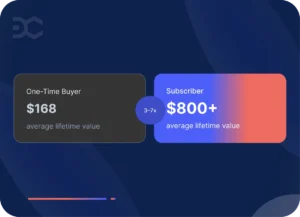
The number that actually tells you if this works is lifetime value against acquisition cost. If a subscriber pays $70 a month and stays ten months, that is $700 in revenue from one signup, and you can spend confidently to win the next one. The same customer churning after two orders barely covers what you paid to get them. Knowing a subscriber’s lifetime value against acquisition cost is what turns guesswork into a spend you can defend.
So how much does it cost to start a pet food subscription on Shopify? Less than most expect. A paid Shopify plan, a subscription app, and your packaging and shipping usually land between $100 and $300 a month before product, and the model builds on infrastructure Shopify already runs.
If you already sell pet food, the recurring revenue is probably sitting in your best-selling bags already. The right subscription app is what turns those repeat buyers into predictable monthly orders instead of sales you have to win again every few weeks.
How to Get Your First Pet Food Subscribers
Your first subscribers will not come from a clever ad. They come from a small group of pet owners who already trust what you feed their animal, and knowing where early subscribers actually come from matters more than how many people you reach.
Start with people who have bought from you once. A customer who already ordered a bag has shown you their pet eats it, so the only thing left is to make the recurring option obvious and worth switching to. Turning those one-time buyers into subscribers is the cheapest growth you will ever get, and the tactics for converting one-time buyers into long-term subscribers work especially well in pet food because the reorder is so predictable.
If you are starting cold, go narrow on intent. Someone searching “grain-free cat food” or “fresh food for senior dogs” is telling you exactly what they want, and they convert far better than a broad pet audience. Build pages and content around those specific needs instead of trying to speak to every pet owner at once.
Make the first order easy to say yes to. A starter kit, food plus a treat or a sample, at a small first-order discount lowers the risk for someone trying a new brand. It is one of the highest-converting offers in the category.
A build-your-own-box option works for the same reason. Letting a customer pick the food, add a chew or a supplement, and set their own frequency makes the subscription feel like theirs, and a plan someone built is far harder to cancel than one they were handed.
Whichever route you take, protect the first delivery. A signup that arrives on time and as promised is what earns the second order, and the second order is where a buyer quietly becomes a subscriber.
Why Pet Food Subscribers Cancel, and How to Keep Them
Pet food churn does not look like normal subscription churn. Some of the most common reasons a customer leaves have nothing to do with you, the price, or the food, which changes how you should respond to every one of them.
A pet passes away. It is the hardest cancellation in this category, and the only right move is to make leaving gentle and immediate, with no retention offer and no friction. Handle that moment with care and you protect a brand people talk about, even after they stop buying.
A vet prescribes a different diet. Now the customer is not rejecting your food, they are following medical advice. If you stock a suitable option, this is a swap, not a cancellation. If you do not, let them go cleanly and leave the door open.
Then there are the cancellations you can actually prevent. A life-stage transition catches people when a puppy formula stops fitting and the plan feels wrong, which is why routing them onto the adult blend automatically saves a subscriber who was about to leave for no real reason. Overstock is the other big one, the bag piling up because deliveries outpace the bowl.
Most of these losses happen early. The first handful of deliveries is when a subscriber decides whether the habit sticks, and pet food is no different, so understanding why subscribers drop off in the first 90 days is where retention is won or lost.
The fix for the preventable ones is letting people pause instead of cancel. Someone overstocked does not want to quit, they want to slow down, and a one-click pause keeps the subscriber, their preferences, and the relationship intact until they are ready again.
A one-click cancel with no alternative offered is one of the most common Shopify subscription mistakes, and it is fixable. That is the work a cancellation flow should do, reading the reason and offering the right response instead of a blunt “are you sure.” Pause the overstocked, swap the diet-changers, release the grieving with grace, and the only subscribers you lose are the ones you were always going to.
The Subscription Metrics That Tell You If It’s Working
Most pet food founders can tell you their subscriber count. Far fewer can tell you whether that number is actually making them money, and the count alone hides more than it reveals.
Four numbers tell the real story:
- Monthly recurring revenue is the baseline, the predictable income your subscriptions generate before any one-time orders. If it climbs month over month the business is healthy; if it flattens while you keep acquiring, churn is eating your gains.
- Churn rate is the percentage of subscribers who leave each month, and for consumable pet food it tends to run lower than most categories. Track it closely, because it warns you of trouble weeks before it shows up in revenue.
- Lifetime value tells you what a subscriber is worth across their whole run, which sets how much you can spend to win the next one. Pair it with acquisition cost and aim to earn at least three times what you spend.
- Cohort retention groups subscribers by the month they joined so you can watch how long each group stays. That pattern shows you exactly where in the journey people slip away.
Common Questions about Starting a Pet Food Subscription
How do pet food subscriptions work on Shopify?
A pet food subscription on Shopify charges a customer automatically and ships their pet’s food on a repeating schedule, with no reorder needed. Shopify’s native Selling Plans hold the billing interval, while a subscription app runs the charges, the customer portal, and failed-payment recovery. The customer picks their frequency and can pause, skip, or swap the order themselves, and the better setups also adjust price and formula as the pet’s weight and life stage change.
Do you need a license to sell pet food online?
Often, yes. Many US states require you to register each pet food product with their Department of Agriculture before you sell into that state, and your label has to follow the model rules set by AAFCO. The responsibility lands on you if you manufacture or repackage the food. If you resell sealed bags from an established brand, the maker has usually handled it, though some states still want the seller on record. Check your own state’s agriculture department first, since the rules vary.
Is a pet food subscription profitable?
Yes, when a subscriber’s lifetime value beats what you paid to acquire them. Pet food is one of the better categories for this, because the food gets eaten on a predictable cycle and switching brands risks upsetting a pet’s stomach, so subscribers stay longer than in most verticals, which keeps churn low. The two things that decide your margin are shipping on heavy bags and keeping your subscribe-and-save discount in the 10 to 15 percent range.
How much does it cost to start a pet food subscription on Shopify?
Most founders spend between $100 and $300 a month before product and fulfillment. That covers a paid Shopify plan and a subscription app, with packaging and shipping on top. You are building on infrastructure Shopify already runs, so there is no heavy upfront platform cost. Your real variable expense is inventory and the freight on heavy orders, which is why many brands build shipping into the subscription price.
Can you dropship pet food on Shopify?
Yes, but it limits how far you can take a subscription. Dropshipping keeps your upfront cost low because a supplier ships on your behalf, yet you give up control over packaging, delivery timing, and the cold chain that fresh or raw food needs. For a replenishment subscription built on retention, slow or inconsistent fulfillment is what makes subscribers cancel, so many pet brands move to holding their own stock or using a fulfillment partner once orders grow.
Most subscription advice assumes the customer stays the same. Pet food doesn’t work that way. The dog you sign up this month is a different dog in a year.
It gets bigger and eats more. The food changes as it ages. Maybe they get a second pet, and now the schedule you set up doesn’t fit either of them. A subscription that can roll with all that keeps people around. One that can’t loses them a few orders in, usually without a complaint, just a quiet cancellation.
So the food is the easy part. The harder part is setting up the subscription so it bends when the pet changes, and doing it early, before you’ve got a few hundred orders going out every week and no simple way to fix it.
Pets grow, diets change, and bags pile up, and that is where most pet food subscriptions quietly leak subscribers. Driftcharge is being built so Shopify pet brands can hold onto subscribers through every change, instead of patching retention after the leak starts.

Ganesh Pawar


Join the waitlist now
Limited early access. Early joiners receive additional discounts on premium features.
Discover how