How to Start a Coffee Subscription Business That Retains Subscribers Past 90 Days
- Updated: May 4, 2026
Table of Contents
Most coffee subscription businesses don’t fail because of bad beans. They fail because the founder spent three months perfecting a roast profile and about fifteen minutes thinking about churn rate.
Here is what usually happens. A roaster launches a subscription coffee service, picks up 40 or 50 subscribers in the first month, and then watches half of them quietly cancel before the third delivery arrives.
That is not a coffee problem. That is a subscription business model problem, and it is fixable if you plan for it from day one.
This is the complete guide to starting a coffee subscription business on Shopify that actually retains customers. The right model, pricing that protects your margins, a fulfillment process that keeps beans fresh, and the retention system that separates growing DTC coffee brands from ones stuck on a churn treadmill.
Why Coffee Is One of the Best Products for a Subscription Business
Coffee has a quality most subscription products don’t. It runs out on a schedule you can predict almost to the day.
A customer who buys a 12-oz bag of whole beans finishes it in roughly two to three weeks. A household of two coffee drinkers goes through it faster. That natural consumption cycle is the foundation every coffee subscription business is built on, and it is why coffee works so well as a recurring product when so many others don’t.
Three things make coffee almost uniquely suited to the subscription model.
It is consumable by design. Unlike a phone case or a piece of clothing, coffee doesn’t sit unused in a drawer. It gets used up, and then the customer needs more. That creates a reorder cycle you can build an entire revenue model around.
It is habitual, not occasional. Roughly two-thirds of American adults drink coffee daily. It is not a seasonal product or an impulse purchase. It is a morning ritual that repeats 365 days a year. A subscription removes the friction of remembering to reorder, and that convenience is what keeps recurring revenue flowing month after month.
Freshness creates a reason to subscribe that retail cannot match. Coffee quality degrades noticeably after roasting. A bag sitting on a supermarket shelf for three months tastes meaningfully different from beans roasted last week. Subscribers who care about quality actually prefer a recurring shipment over buying retail, which means freshness becomes built-in retention that most product categories simply don’t have.
The global coffee subscription service market reached $808.8 million in 2024, and analysts project it to surpass $2.2 billion by 2033 at a compound annual growth rate of 12.1%. The opportunity is real and still early for independent roasters and DTC brands building a subscription coffee service on Shopify.
But the brands capturing that growth aren’t the ones that launched the fastest. They are the ones who treated subscriptions as an infrastructure problem from day one, not just a button they added to a product page.
What Is a Coffee Subscription Business?
A coffee subscription business delivers freshly roasted coffee to customers on a recurring schedule, weekly, bi-weekly, or monthly, without the customer needing to reorder each time. It is a form of recurring commerce built around a product people already consume on autopilot.
That distinction matters more than it sounds. A one-time coffee sale requires a new marketing touch every single time a customer buys. A subscription coffee service compounds value over time. One customer acquired today could generate 6, 12, or 24 orders over the next year or two without any additional ad spend.
That shift changes the entire economics of the business. Acquiring a new customer costs five to seven times more than retaining an existing one. A coffee subscription business model flips that equation in your favour, with lower customer acquisition cost per order, higher lifetime value, and predictable monthly revenue you can actually plan around.
How Coffee Subscriptions Differ from One-Time Sales
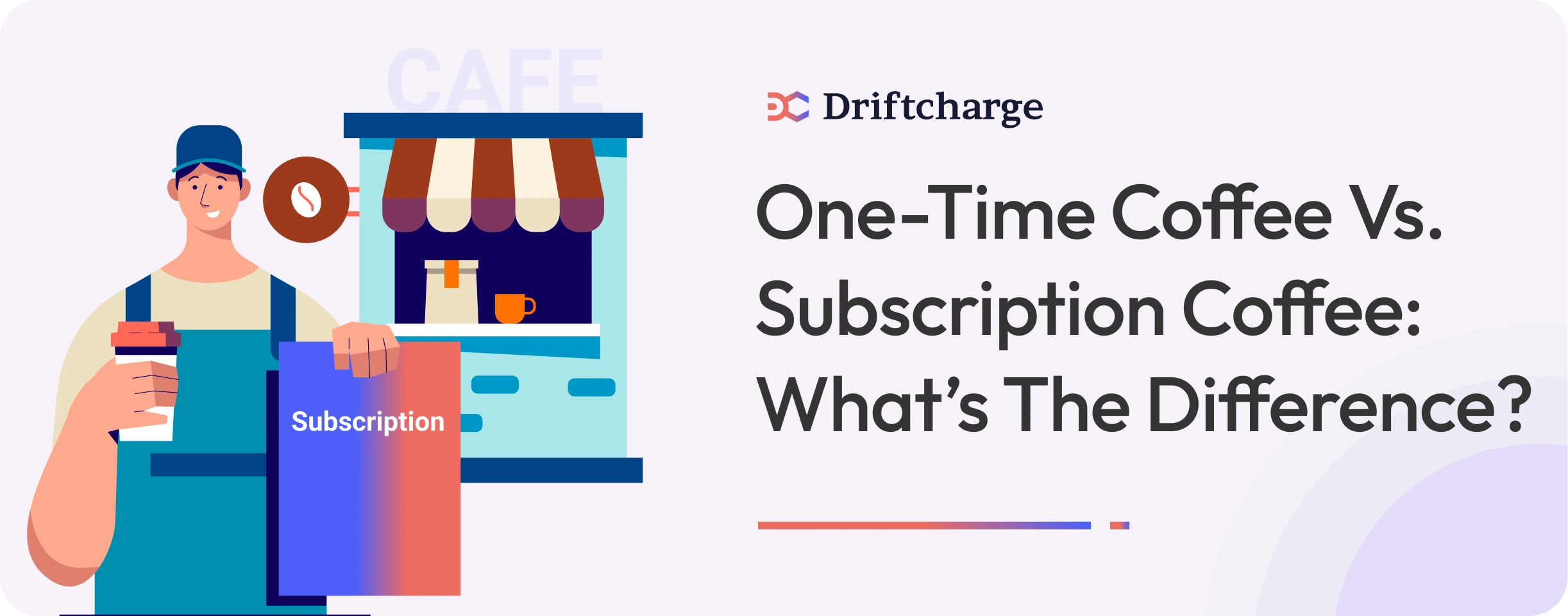
The biggest difference is not the checkout flow. It is the relationship. One-time sales are transactional. The customer buys, you ship, and you hope they come back. A subscription is a commitment from both sides. You promise consistent quality and reliable delivery. They permit you to charge their card again next month.
That commitment changes how you run the business. Your focus shifts from acquisition campaigns to retention workflows. You start tracking churn rate instead of just conversion rate. Your product decisions become about making the experience better for existing subscribers, not just attracting new ones.
Common Coffee Subscription Formats
Most coffee subscription services fall into one of four formats:
Curated or Roaster’s Choice – You select a different single-origin or seasonal blend each cycle. Works well for showcasing your range and positioning your brand as the expert.
Fixed Product Repeat – Customers choose their favourite blend and receive the same thing every time. Simple to operate, low complexity, high retention for customers who know what they like.
Build Your Own – Customers select their beans, grind type, bag size, and delivery frequency. More complex to build, but it creates a highly personalized experience that is harder to cancel.
Prepaid or Gift – Customers pay upfront for 3, 6, or 12 months. Great for holiday gifting and cash flow. Works best as a complement to monthly plans, not a replacement.
If you are just starting, a fixed product repeat model with one or two hero blends is the lowest friction path to your first 50 subscribers. You can add curated and build-your-own options later once your subscriber churn numbers tell you what customers actually want.
Before You Launch: What Needs to Be in Place
Starting a coffee subscription business before your systems are in place is one of the fastest ways to lose your first subscribers before they even become loyal customers. The product might be excellent. If your fulfillment is inconsistent, your billing is unmanaged, and your customer has no way to skip a delivery, they will cancel, and they will not come back.
Before you flip the switch, get these four things sorted.
A product catalogue that is ready to ship on repeat – One or two hero blends are enough to start. Every product you offer on subscription needs to be consistently available. Seasonal or limited runs work well as one-time purchases but create fulfillment problems when subscribers expect them every month.
A fulfillment process tied to a roasting schedule – Subscribers expect fresh beans, not whatever is left in your inventory. Map out your roast days, pack days, and ship days before you take a single subscription order. Section 8 covers this in detail.
A Shopify subscription app is installed and configured – Shopify does not handle recurring billing natively. You need a subscription app to manage billing cycles, the customer portal, skip and pause options, and failed payment recovery. Choosing the wrong app early creates migration headaches later.
A basic customer support system for subscription-specific issues – Skips, pauses, address changes, and billing questions are all different from standard ecommerce support. Make sure you have a process for handling them before subscribers start asking.
Before you flip the switch, get these four things sorted.
Customers pick a specific product (like their favorite blend or roast level) and receive it on repeat. This model works well if you have a bestseller and want to simplify logistics.
A Note on B2B Coffee Subscriptions
Most roasters think about retail subscribers first, but offices and workplaces are an underserved segment worth considering early. Corporate coffee subscriptions typically carry higher order values, longer retention, and lower churn than individual consumer plans. If you have existing relationships with local businesses, a simple office subscription plan with larger bag sizes, consolidated billing, and flexible delivery can become a meaningful revenue stream alongside your DTC programme.
How to Choose the Right Coffee Subscription Model
The model you choose affects everything downstream. Your pricing, your fulfillment complexity, your tech stack, and ultimately your churn rate all flow from this one decision. Getting it wrong early means rebuilding systems later when you have active subscribers depending on them.
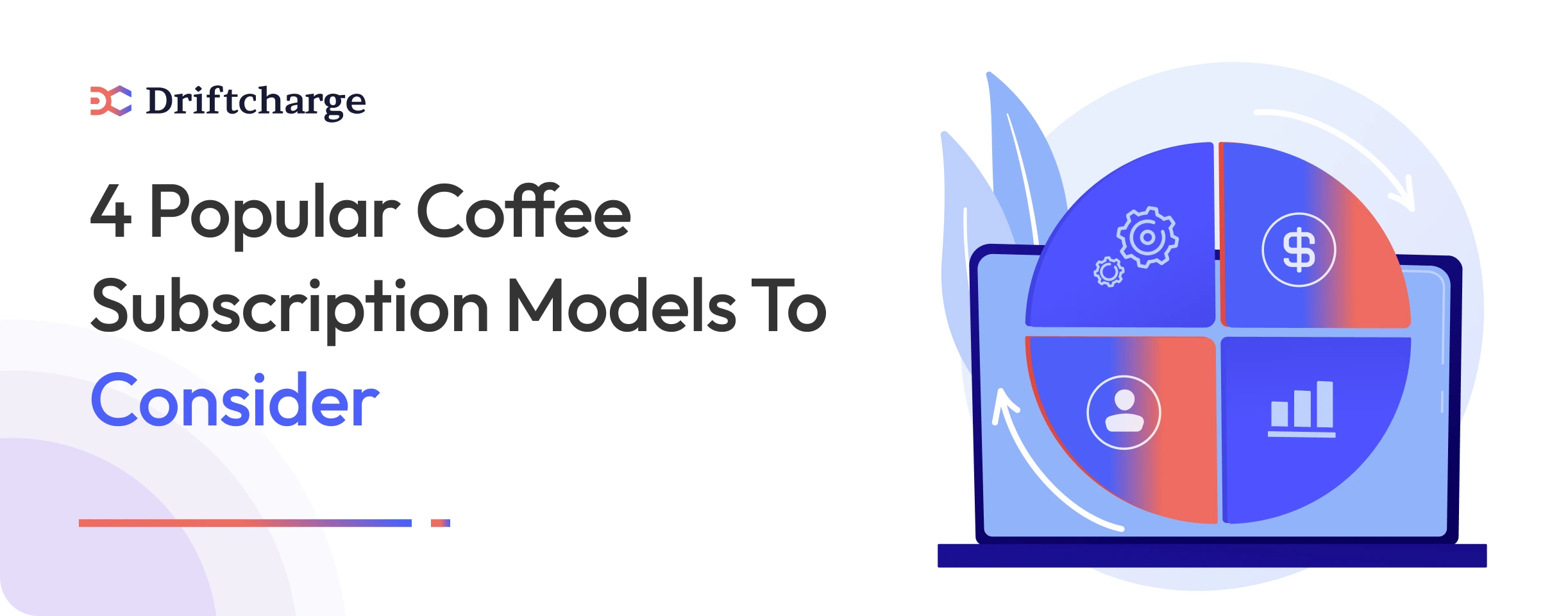
There are four coffee subscription business models worth knowing.
Curated or Roaster’s Choice – You select a different single-origin or seasonal blend each cycle. This positions your brand as the expert and works well if you offer multiple origins. It also gives you control over inventory rotation, which helps move seasonal lots without discounting them publicly.
Fixed Product Repeat – Customers choose their favourite blend and receive the same thing every time. This is the simplest model to operate and the lowest friction path to your first 50 subscribers. If you have one strong hero product, start here.
Build Your Own – Customers select their beans, grind type, bag size, and delivery frequency. The personalization is compelling, but the operational complexity is real. More SKU combinations mean more inventory forecasting challenges and more potential for fulfillment errors. Unless you already have 100 or more active subscribers and a solid fulfillment process, keep this for later.
Prepaid and Gift Subscriptions – Customers pay upfront for 3, 6, or 12 months. These are particularly strong during holiday periods and work well as a complement to your monthly plans. A 3-month gift subscription is one of the easiest upsells a coffee brand can offer and provides upfront cash flow without the churn risk of month-to-month plans. Do not build your entire business on prepaid, though. Long-term growth depends on monthly subscribers who renew because they want to, not because they already paid.
Matching the Model to Your Stage
If you are launching for the first time, fixed product repeat with one or two hero blends is the right call. Start simple, get your first 50 subscribers, and let your churn data tell you what to build next. The brands that struggle are the ones that launch with five subscription tiers, three grind options, and four frequency choices on day one and then cannot figure out why people are cancelling.
Complexity can always be added. Simplicity is much harder to recover once you have lost subscribers to a confusing experience.
Coffee Subscription Pricing: How to Set Prices Without Hurting Your Margins
Pricing a coffee subscription is not as simple as taking your one-time price and knocking 10% off. You need to account for the recurring nature of the relationship, shipping costs, and the perceived value that keeps customers from cancelling when a cheaper option appears.
Subscription vs One-Time Pricing
Most coffee subscription businesses offer a subscribe and save discount of 10 to 15% off the one-time price. That range is enough to feel like a deal without destroying your margins. Going above 15% trains customers to expect unsustainable deals and tends to attract subscribers who leave the moment a cheaper option appears.
Here is a simple pricing framework to illustrate how the discount range works in practice:
| Product | One-Time Price | Subscription Price | Discount |
|---|---|---|---|
| Standard Blend | $16.99 | $14.99/mo | 12% |
| Single Origin | $19.99 | $17.49/mo | 13% |
| Premium Reserve | $24.99 | $21.99/mo | 12% |
Notice the discount stays in the 12 to 13% range across all three tiers. This creates a consistent value signal without training customers to expect unsustainable deals.
Shipping: Bake It In or Show It Separately
Free shipping increases subscription conversion rates but for small-batch roasters, the cost can wipe out your margin entirely. Two approaches work depending on your average order value.
Bake shipping into the price and advertise free shipping on all subscriptions. Customers see a clean number and feel they are getting a perk.
Set a minimum order threshold, for example, free shipping on subscriptions over $30 per month, to encourage larger orders and a higher average order value.
Either way, be transparent. Surprise shipping charges at renewal are one of the fastest paths to cancellation. A small uptick in monthly churn rate compounds significantly over a year. If you want to see exactly how much, the churn rate calculator shows you what even a 2% increase costs in annual recurring revenue.
What Subscribers Are Actually Paying For
Price sensitivity is real in the coffee subscription market. Over 38% of potential subscribers have delayed or cancelled a coffee subscription due to cost concerns. The brands that retain at the highest rates are not the ones with the deepest discounts. They are the ones who make the value feel undeniable through freshness, consistency, and flexibility.
Delivery Frequency and Flexibility: The Hidden Retention Lever
The number one reason coffee subscribers cancel is not that they disliked the coffee. It is that they had too much of it sitting in the cupboard.
Rigid delivery schedules create a problem that has nothing to do with your product quality. A subscriber who loves your roast will still cancel if deliveries keep arriving faster than they can drink them. Frequency and flexibility are not operational details. They are retention decisions.
Which Frequencies to Offer
Start with three options: every two weeks, every three weeks, and every four weeks. This covers the full range of consumption patterns without overwhelming customers with choices.
Every two weeks works best for daily drinkers buying smaller bag sizes. Every four weeks suits customers buying larger quantities or those who supplement with local coffee purchases. Every three weeks sits in the middle and is often the most popular option once subscribers have been active for a few months and know their actual consumption rate.
Avoid weekly deliveries unless you are specifically targeting offices or high-volume households. For most individual subscribers, weekly is too much coffee, and they will cancel within two months.
Pause, Skip, and Swap: Non-Negotiable Features
65% of consumers say flexibility to pause or cancel is the number one feature they look for in a recurring service. If a subscriber cannot skip a delivery when they are travelling or pause when they are overstocked, they will cancel instead. Brands offering skip and pause options see significantly higher retention rates compared to those with rigid schedules.
These controls need to be one-click actions inside the customer portal, not buried behind a support ticket. The easier it is to manage a subscription, the longer subscribers stay. Most cancellations do not happen because of coffee quality. They happen when managing a subscription feels harder than cancelling it.
Swap options, letting subscribers change their blend or roast level each cycle, also prevent subscription fatigue, which is one of the most common reasons why subscribers drop off quietly after the first 90 days.
How to Set Up a Coffee Subscription on Shopify
Shopify does not include native subscription management out of the box. You can create subscription-eligible products using Shopify’s purchase options API, but you need a dedicated subscription app to handle recurring billing, the customer portal, lifecycle management, and payment recovery.
Some platforms position Shopify subscriptions as overly complex. The reality is that with the right app handling billing, portal, and retention logic, Shopify gives coffee brands more control over their subscription experience than any all-in-one platform. You own your customer data, your checkout, and your brand experience end to end.
What to Look for in a Shopify Subscription App
Not every subscription app is built the same. When evaluating your options, these are the things that actually matter for a coffee subscription business specifically.
Cancellation flow with save offers. An app that lets subscribers cancel in one click with no alternatives presented is costing you revenue. Look for one that presents pause, skip, or frequency change options before a subscriber exits.
Dunning automation for failed payments. Failed payments account for 20 to 40% of total subscription cancellations. An app without automated retry sequences and email notifications is leaving a significant portion of your recurring revenue unrecovered.
A self-serve customer portal. Subscribers need to be able to pause, skip, swap, and update their details without contacting support. If they have to email you to make a change, you will lose them before they get a reply.
Pre-renewal notifications. Subscribers should never be surprised by a charge. Automated emails before each billing cycle reduce dispute rates and build the kind of trust that keeps people subscribed long term.
These are not advanced features. They are the baseline for any subscription app worth using. Driftcharge is designed around exactly these requirements for Shopify coffee subscription brands, with cancellation flows, dunning automation, and a self-serve portal built into a single install.
What Your Setup Needs Before You Take the First Order
A product page with both one-time and subscription purchase options side by side. Customers should see the subscribe and save discount clearly without hunting for it.
Automated dunning is active from day one. Do not wait until you have 100 subscribers to set this up. Every failed payment you miss in the early days is a subscriber you will not get back.
A cancellation flow built before you launch. Most brands build this after they start losing subscribers. By then, it is too late for the ones who have already left.
Coffee Subscription Fulfillment: Keeping Beans Fresh and Shipments on Time
Fulfillment is where a subscription coffee service either builds trust or destroys it. Unlike most subscription products, coffee quality degrades noticeably after roasting. Your subscribers chose a recurring delivery specifically because they want fresh beans. If you are shipping week-old inventory, you are breaking the core promise of the subscription.
Build a Roast-to-Ship Calendar
The most reliable way to guarantee freshness is to map your subscription cycle to your roasting schedule before you take a single order. A simple weekly calendar works:
| Day | Action |
|---|---|
| Monday | Cutoff day: last chance for subscribers to make changes |
| Tuesday/Wednesday | Roast day: roast only what is needed for that cycle |
| Thursday | Pack and ship: ship within 24 to 48 hours of roasting |
This means every subscriber gets beans roasted within the last 48 hours. That freshness is a tangible quality difference they can taste, and it becomes part of your brand story over time.
Managing Inventory Across Subscription and One-Time Orders
One of the trickiest parts of running a coffee subscription alongside one-time sales is inventory allocation. If you oversell a single-origin lot to one-time buyers, your subscribers get bumped or substituted, and that erodes trust fast.
The fix is straightforward. Reserve inventory for subscribers first. Treat your subscriber base as committed demand and sell remaining stock to one-time buyers. This is especially important during limited releases and seasonal blends where supply is genuinely constrained.
Shipping Cadence and Delivery Expectations
Consistency matters as much as speed. Build buffer time into your calendar for holidays and weather delays. Provide tracking on every shipment and communicate expected delivery windows clearly, especially for first-time subscribers who are still forming their impression of your brand.
A subscriber who receives their first two deliveries on time and fresh will forgive an occasional delay. One whose first delivery arrives late with no communication will not give you a second chance.
Coffee Subscription Retention: Why Most Churn Happens in the First 90 Days
Most coffee subscription businesses do not struggle with sign-ups. They struggle with keeping people after the first two or three deliveries.
44% of subscription cancellations happen within the first 90 days. That means if you acquire 50 subscribers in January, you could lose 20 or more of them by April, before you have even recouped your acquisition cost. The churn rate for coffee subscriptions sits at around 11% on average. For context, if you are losing 11% of subscribers monthly before recouping your acquisition cost, the math works against you fast. The customer lifetime value calculator shows you exactly where you stand.
The Three Retention Levers That Actually Move the Needle
Onboarding communication – The first 30 days set the tone for the entire subscriber relationship. Send a welcome email confirming what they subscribed to, when to expect the first delivery, and how to manage their subscription. Follow up after the first delivery, asking for feedback. Brands that invest in this sequence see meaningfully lower first-month churn than those who send a single order confirmation and go quiet.
Flexibility controls – A subscriber who pauses for two weeks is still a subscriber. One who cancels because they could not pause is gone, and it costs five to seven times more to replace them than it would have cost to let them pause. Pause, skip, and swap controls are not nice-to-have features. They are your first line of defence against voluntary churn.
Proactive retention – By the time a subscriber clicks cancel, it is often too late. The strongest retention strategies identify at-risk subscribers before they reach the cancellation page, based on signals like skipped deliveries, reduced engagement, or support tickets. Acting on those signals early, with the right offer at the right time, is what separates brands with healthy monthly recurring revenue from ones stuck on a churn treadmill.
Recovering Failed Payments
Involuntary churn, subscribers who drop off because of expired cards or insufficient funds, accounts for 20 to 40% of total cancellations. Set up automated retry sequences with email notifications at each step. The subscriber often does not know their payment failed. A simple reminder email frequently saves the subscription without any friction on either side.
7 Common Coffee Subscription Mistakes That Kill Retention Early
Most of these mistakes happen in the first 90 days. Most of them are avoidable.
1. Launching with too many options – Five subscription tiers, three grind sizes, four frequency choices. Customers freeze and leave. Start with one or two plans and expand based on what your churn data tells you, not what you assume subscribers want.
2. Setting rigid, unchangeable schedules – If subscribers cannot adjust their delivery timing, they cancel. Flexibility is not a nice-to-have. It is the difference between a subscriber who pauses for a month and one who cancels and never comes back.
3. Ignoring failed payments – Silent payment failures are one of the largest sources of involuntary churn. Without automated dunning, you are losing revenue you already earned from subscribers who did not even intend to cancel.
4. No cancellation flow – A one-click cancel button is a one-click revenue loss. A proper cancellation flow that presents a pause, a skip, a frequency change, or a discount can save a meaningful percentage of subscribers who would otherwise leave without ever being offered an alternative.
5. Treating subscriptions as set and forget – Your subscriber experience needs active attention every month. Fresh communication, seasonal offers, and feedback loops keep the relationship alive. Static subscriptions go stale, and subscribers drift away quietly, which is the hardest churn to catch because there is no single moment when you lose them.
6. Discounting too aggressively – A 30% subscribe and save discount attracts price shoppers who churn the moment they find a better deal. Keep your discount in the 10 to 15% range and compete on freshness, consistency, and experience instead.
7. Not tracking the right metrics – If you are only watching subscriber count, you are flying blind. Churn rate, lifetime value, and monthly recurring revenue are the numbers that tell you whether your subscription business is actually healthy.
Coffee Subscription Launch Checklist
Before you take your first recurring order, make sure these are in place.
| Area | What to Have Ready |
|---|---|
| Product | 1 to 2 hero blends with subscription option enabled and consistent availability confirmed |
| Model | Subscription model chosen: fixed repeat, curated, or build your own |
| Pricing | Subscribe and save discount set at 10 to 15%, shipping costs accounted for |
| Frequency | 2 to 3 delivery frequency options available with skip and pause enabled |
| App | Shopify subscription app installed with dunning, portal, and cancellation flow configured |
| Portal | Customer portal live with skip, pause, swap, and cancel options working |
| Dunning | The automated payment retry sequence is active before the first billing cycle |
| Fulfillment | Roast-to-ship calendar mapped with cutoff days clearly defined |
| Welcome email, pre-renewal reminder, and failed payment notification configured | |
| Retention | Cancellation flow with save offers built and tested |
| Metrics | Tracking churn rate, monthly recurring revenue, lifetime value, and CAC from day one |
If you can check every row in this table before launch, you are starting from a stronger position than most coffee subscription businesses do.
Building a coffee subscription business on Shopify is not complicated. Keeping subscribers beyond the first 90 days is where most brands lose ground, and it comes down to having the right systems in place before you need them.
FAQs
What is a coffee subscription business?
A coffee subscription business delivers freshly roasted coffee to customers on a recurring schedule, weekly, bi-weekly, or monthly, with automatic billing and no need to reorder. Customers choose their beans, grind, and frequency through a self-serve portal where they can skip, pause, or cancel at any time. For merchants, a subscription coffee service converts one-time buyers into predictable monthly recurring revenue.
How does a coffee subscription work on Shopify?
Shopify does not handle recurring billing natively, so you need a subscription app to manage billing cycles, the customer portal, and payment recovery. Once set up, orders are automatically created, billed, and fulfilled on the customer’s chosen schedule. Subscribers receive a pre-renewal notification before each billing cycle and can skip, pause, or swap their order without contacting support.
How much does it cost to start a coffee subscription business?
The core costs are your Shopify plan, a subscription app, packaging, and shipping. Most subscription apps start between $10 and $50 per month, depending on features. Packaging and shipping costs vary by bag size and delivery frequency, but most roasters factor these into their subscribe-and-save pricing rather than charging separately. Keep your subscribe-and-save discount at 10 to 15% to protect margins while still offering a compelling reason to subscribe over buying one-time.
Can I offer a coffee subscription as a gift?
Yes. Prepaid gift subscriptions in 3, 6, or 12-month increments are one of the highest-converting products for coffee brands, particularly during the holiday season. They provide upfront revenue, introduce new customers to your subscription experience, and frequently convert into ongoing monthly subscribers once the prepaid period ends. Set up gift subscriptions alongside your standard monthly plans from day one.
How do I start a coffee subscription business?
Start with one or two hero blends on a fixed repeat model. It is the lowest-friction path to your first 50 subscribers. Install a Shopify subscription app that handles recurring billing, a self-serve customer portal, and automated dunning for failed payments. Map your roast-to-ship calendar before taking the first order, set your subscribe-and-save discount at 10 to 15%, and build your cancellation flow before launch, not after you start losing subscribers.
A coffee subscriber who stays 12 months is worth more than any single sale you’ll ever make. Are you protecting that revenue? Driftcharge gives coffee subscription brands on Shopify flexible billing, self-serve subscriber control, and built-in retention tools, so your best customers never slip away.

Ganesh Pawar

Join the waitlist now
Limited early access. Early joiners receive additional discounts on premium features.
Discover how


You may also like

September 16, 2026
10 Best Shopify Trust Badge Apps in 2026 to Boost Conversions