Shopify Upsell and Cross-Sell Apps That Actually Boost AOV in 2026
- Updated: April 26, 2026
Table of Contents
Here is a mistake a lot of Shopify merchants make: they spend months tightening their upsell flows to squeeze an extra $8 from every order, while ignoring how much more that same customer could be worth if they came back again and again.
Upselling and cross-selling are not just about the order in front of you. Done right, they are one of the fastest ways to build revenue that is actually predictable. But that requires knowing when to show an offer, what to show, and what you are genuinely optimising for.
What follows covers the strategies, the placements, and the five best Shopify upsell and cross-sell apps in 2026, with a specific focus on DTC brands running subscriptions.
Upsell vs Cross-Sell: What Is the Actual Difference?
Most merchants use these terms interchangeably. They are not the same thing, and confusing them leads to offers that show up in the wrong place at the wrong time.
Upselling is showing a customer a better version of what they are already buying. Higher quality, larger quantity, a premium tier. The product category stays the same; the value goes up.
Cross-selling is suggesting a complementary product alongside what they are buying. Not an upgrade, an addition. Something that makes the main purchase more useful or complete.
A customer buying a monthly coffee subscription is upsold when they are shown a larger bag size or a biweekly delivery tier. They are cross-sold when they are shown a hand grinder or a set of filters to go with it.
Both tactics increase average order value. But they work at different moments, for different reasons, and the best-performing Shopify stores use them together rather than choosing one over the other.
What Is Upselling on Shopify?
Upselling is the practice of showing a customer a higher-value version of the product they are already buying, before or during checkout.
A customer adds a 250g bag of single-origin coffee to their cart. An upsell shows them a 500g bag of the same roast at a small saving per gram, or a subscription tier that delivers fresh beans every two weeks. The product category stays the same. The value, and your margin, go up.
What makes upselling work on Shopify is not just timing. It is relevance. An offer that stays inside the customer’s existing intent converts. An offer that jumps to an unrelated product does not. Showing a skincare customer a larger version of the moisturiser they are buying works. Showing them a supplement they have never considered does not.
For subscription brands, a well-placed upsell does something a one-time order never can. Every customer who upgrades to a higher tier or a more frequent delivery cycle raises the baseline value of your recurring revenue, not just the order in front of you. That compounds month over month in a way that a single AOV bump simply does not.
Upselling is also where customer retention starts. A subscriber who chose a premium tier from the beginning has more invested in staying than one who took the cheapest option available.
What Is Cross-Selling on Shopify?
Cross-selling is suggesting complementary products alongside what a customer is already buying. Not a better version of the same thing, a different product that makes their purchase more useful or complete.
A customer buying a vitamin C serum from your skincare brand sees a collagen moisturiser and SPF spray suggested beneath it. These are not upgrades. They are products that work alongside what they have already chosen. That is cross-selling in practice.
Cross-selling works especially well through product bundles, where two or three complementary items can be added in a single click. The goal is to make product discovery feel effortless rather than promotional. When it works, customers feel like you understood what they needed before they thought to ask.
For subscription brands, cross-selling does not stop at the first checkout. A subscriber renewing their skincare order is an opportunity to surface a complementary product inside their customer portal, with no new checkout required. That kind of in-subscription cross-sell converts at significantly higher rates than a cold product page suggestion, because the trust is already there.
The distinction worth understanding is this: upselling increases the value of what the customer is buying. Cross-selling increases the breadth of what they take home. Both matter, and they work best when used together at the right moment in the customer journey.
Where to Place Upsell and Cross-Sell Offers on Shopify
The most important decision you will make with upsell and cross-sell tactics is not which app to use. It is where to show the offer.
Placement determines everything. The same offer shown at the wrong moment will underperform every time. Here is how each placement works and what to optimise for at each stage.
| Placement | Upsell Goal | Cross-Sell Goal | Conversion Tip |
|---|---|---|---|
| Product Page | Show the premium variant or a larger size | Suggest add-ons that complement the main item | Keep to one offer; do not distract from the add to cart |
| Cart / Cart Drawer | Offer a larger quantity or a better version | Frequently Bought Together bundle | Trigger at a cart value threshold relevant to your average order size |
| Checkout (Plus only) | One-click subscription upgrade | Minimal, reduce friction at payment | Use subscribe and save framing to lift LTV, not just AOV |
| Post-Purchase / Thank-You | One-click upsell before the order is confirmed | Small accessory or consumable add-on | The best moment to convert a one-time buyer into a subscriber |
| Subscriber Portal | Upgrade subscription tier or delivery frequency | Add a complementary product to the next order | Existing customers are 60 to 70% more likely to convert on an additional offer than a new visitor, making this the highest LTV leverage point in the funnel |
The subscriber portal row is worth pausing on. Most upsell apps focus entirely on pre-purchase and post-checkout moments. But existing subscribers are already bought in. They trust your brand. Showing them a relevant upgrade or complementary product inside their portal, with no new checkout required, converts at rates that cold product pages cannot match.
Most merchants treat the subscriber portal as a place to skip, pause, or cancel. The brands seeing the strongest LTV growth are treating it as their most valuable upsell surface.
Why AOV Is Only Half the Story
Average order value matters. But for DTC brands running subscriptions, optimising for AOV alone is optimising for the wrong number.
Acquiring a new customer costs 5 to 25 times more than retaining an existing one. That means a subscriber you converted through a well-placed post-purchase upsell is not just worth more on day one. They are delivering compounding returns every month they stay, in a way that a one-off AOV bump never will.
The brands winning at upselling right now are not just trying to make bigger baskets. They are using upsell and cross-sell moments to identify which customers should become subscribers, and then moving them there. A one-time buyer who upgrades to a subscription tier through a post-purchase offer will consistently deliver more value over the following year than the same customer who adds a single item to their cart and never returns.
If you want to understand exactly what a single subscription conversion is worth to your store, use customer lifetime value calculator to run the numbers before you pick an app.
The metric that actually matters is not how much each order is worth. It is how long each customer stays, and how much they spend across that time.
The 5 Best Shopify Upsell and Cross-Sell Apps in 2026
The right app depends entirely on where in the funnel you need help most. An app that dominates post-purchase flows will not necessarily be the best choice for product page bundling. Before comparing features, know your primary placement.
Here is how the five strongest options stack up, including which ones work alongside subscription programmes.
| App | Best For | Starts At | Subscription Compatible |
|---|---|---|---|
| ReConvert | Full-funnel upsell, PDP to thank-you page | $4.99/mo | Recharge integration; good for post-order subscription upsells |
| Rebuy | AI personalisation across the full store | $25/mo | Native Recharge and Klaviyo integration; strongest for subscriber upsell flows |
| Zipify OCU | Post-purchase one-click upsells | $8/mo | Subscription-compatible; strong for Shopify Plus checkout upsells |
| AfterSell | Thank-you page and post-purchase offers | $34.99/mo | Subscribe and save post-purchase offers work well here |
| Frequently Bought Together | Product page bundling | $19.99/mo | Good for bundle to subscribe offers on product pages |
ReConvert — Best for Full-Funnel Upsell Control
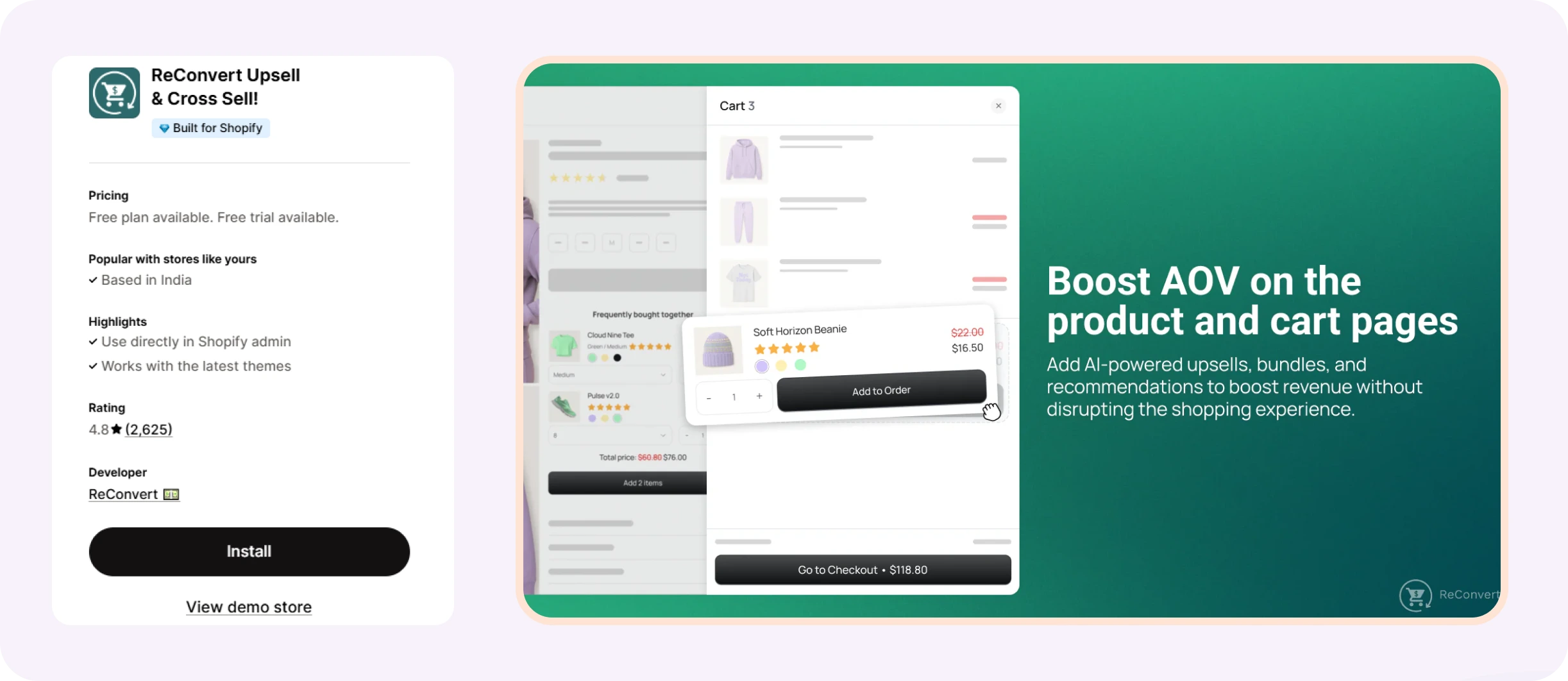
ReConvert covers the full funnel from product page offers through to post-purchase thank-you page flows, all built through a drag-and-drop builder that requires no development work. It integrates with Recharge, making it a practical option for subscription brands that want to upsell immediately after an order without building a custom flow. Built-in A/B testing means you can test offer language and placement without a separate tool.
Best for: Merchants who want full-funnel control with minimal setup. Starts at $4.99/month.
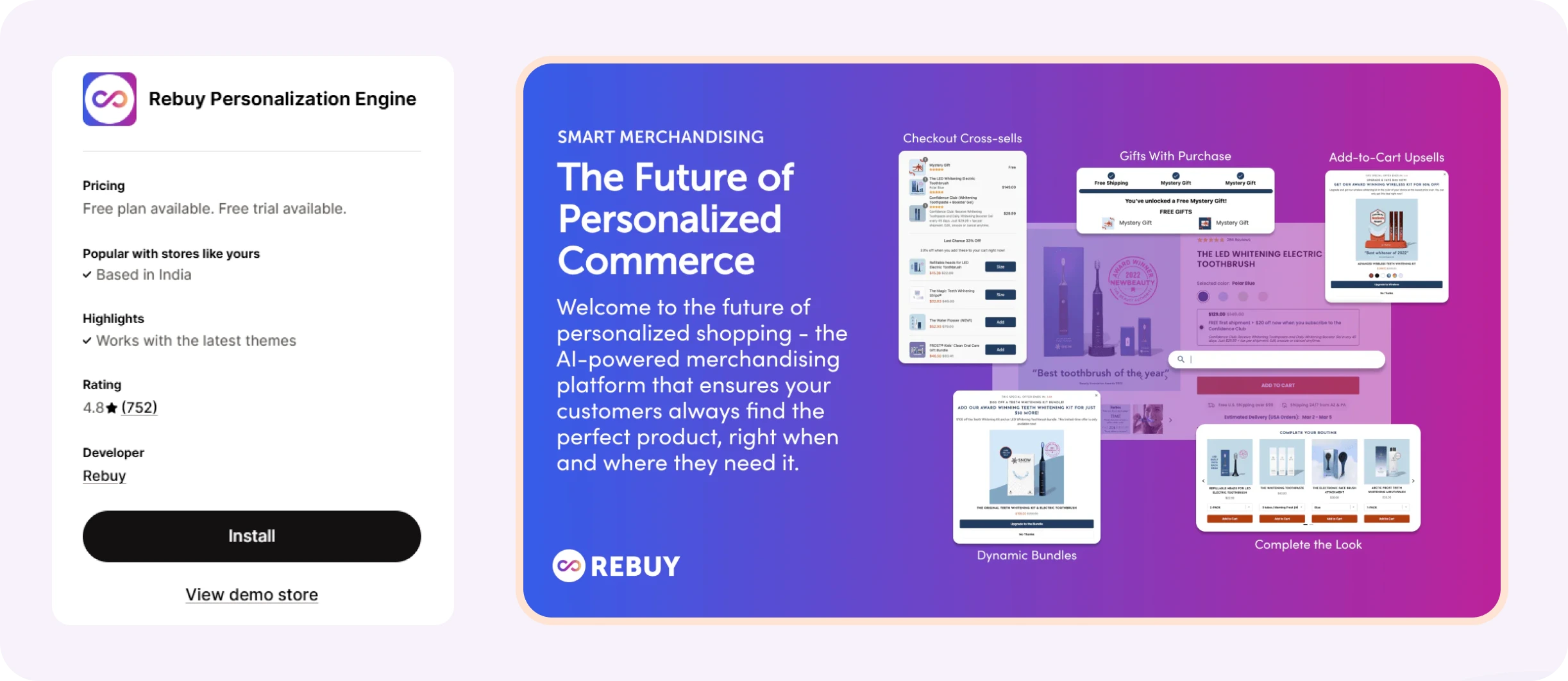
Rebuy — Best for AI-Powered Subscriber Upsells
Rebuy uses AI-driven recommendations across the entire store, covering product pages, cart, checkout, and post-purchase. Its native integrations with Recharge and Klaviyo make it the strongest choice for subscription brands running personalised upsell flows to existing subscribers. Rebuy can surface subscriber-specific offers based on billing cycle and order history, which none of the other apps on this list do natively.
For merchants comparing Rebuy against AfterSell, Rebuy wins on personalisation depth and subscription integration. AfterSell wins on simplicity and post-purchase focus.
Best for: Growing DTC brands that want data-driven, cross-channel personalisation. Starts at $25/month.
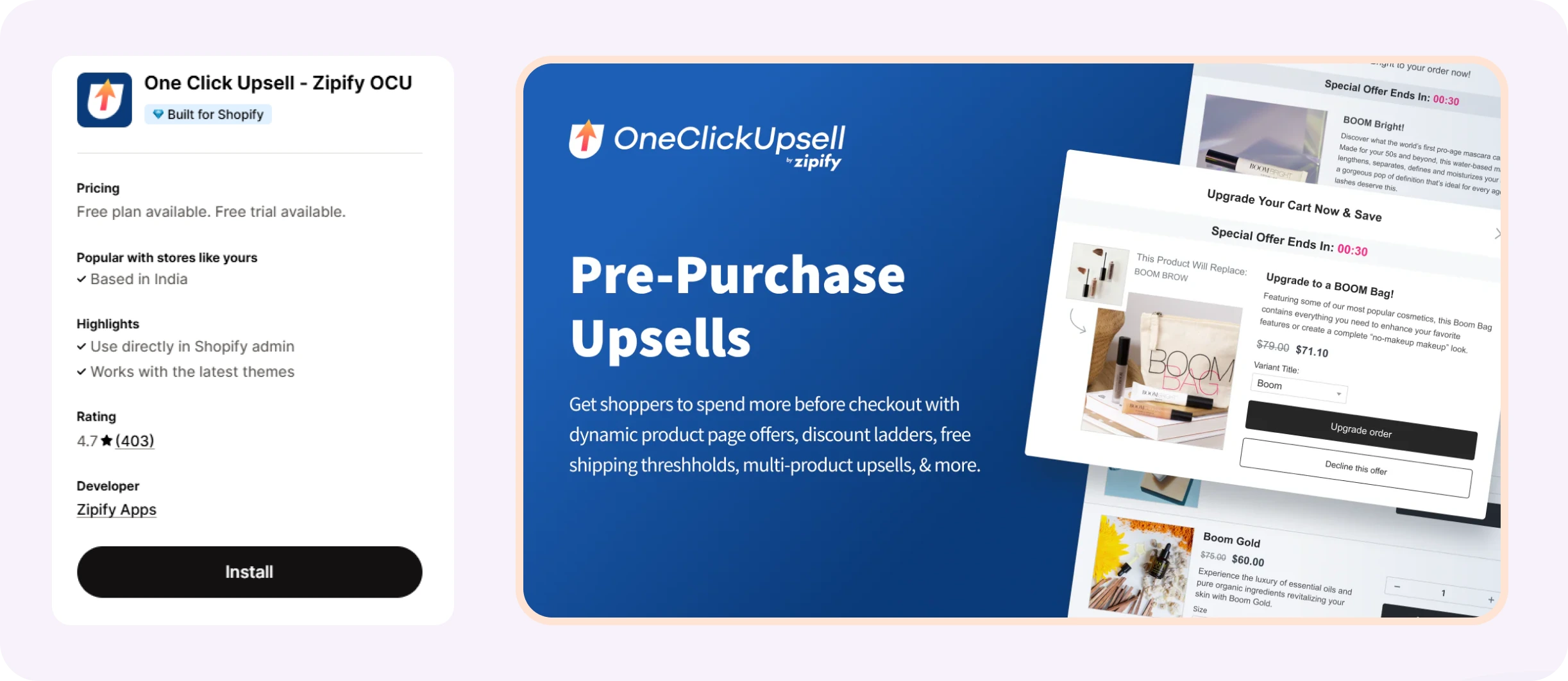
Zipify OCU — Best for One-Click Post-Purchase Offers
Zipify’s strength is its one-click post-purchase flow. Offers appear after checkout but before the order is fully confirmed, with no re-entry of payment details required. For Shopify Plus stores, it also unlocks in-checkout upsells at no additional cost. Merchants looking for a Zipify OCU alternative will find ReConvert covers similar ground at a lower entry price, though with less focus on the post-purchase window specifically.
Best for: Shopify Plus merchants focused on post-purchase conversion. Starts at $8/month.
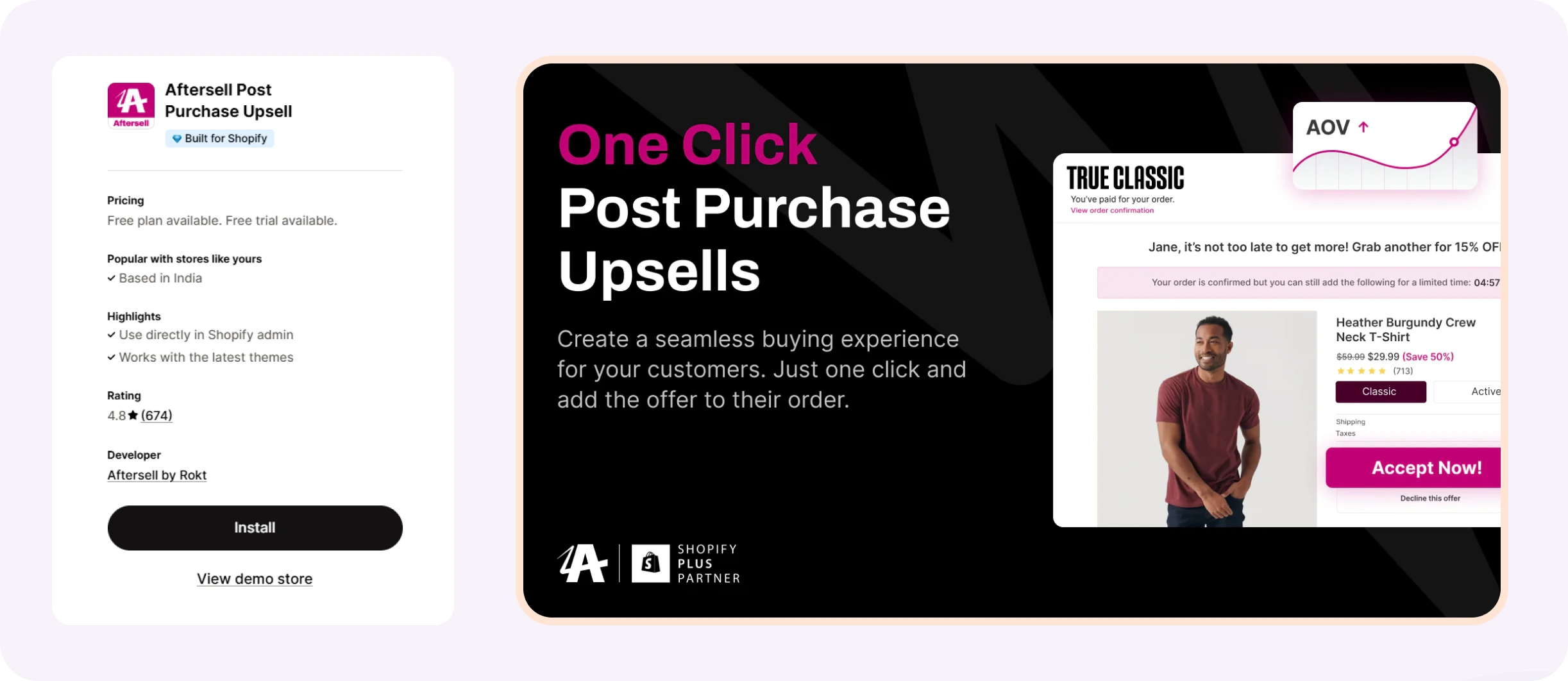
AfterSell — Best for Post-Purchase Subscriber Acquisition
AfterSell specialises in post-purchase and thank-you page optimisation. Its subscribe and save post-purchase offers are a natural fit for DTC supplement, pet food, and coffee brands converting one-time buyers into subscribers immediately after the first order. Offer targeting by cart size, customer tags, and UTM source means you can personalise without building complex flows. Merchants weighing AfterSell against ReConvert will find AfterSell owns the post-purchase window more completely but offers less full-funnel flexibility.
Best for: Brands focused on post-purchase subscriber acquisition. Starts at $34.99/month.
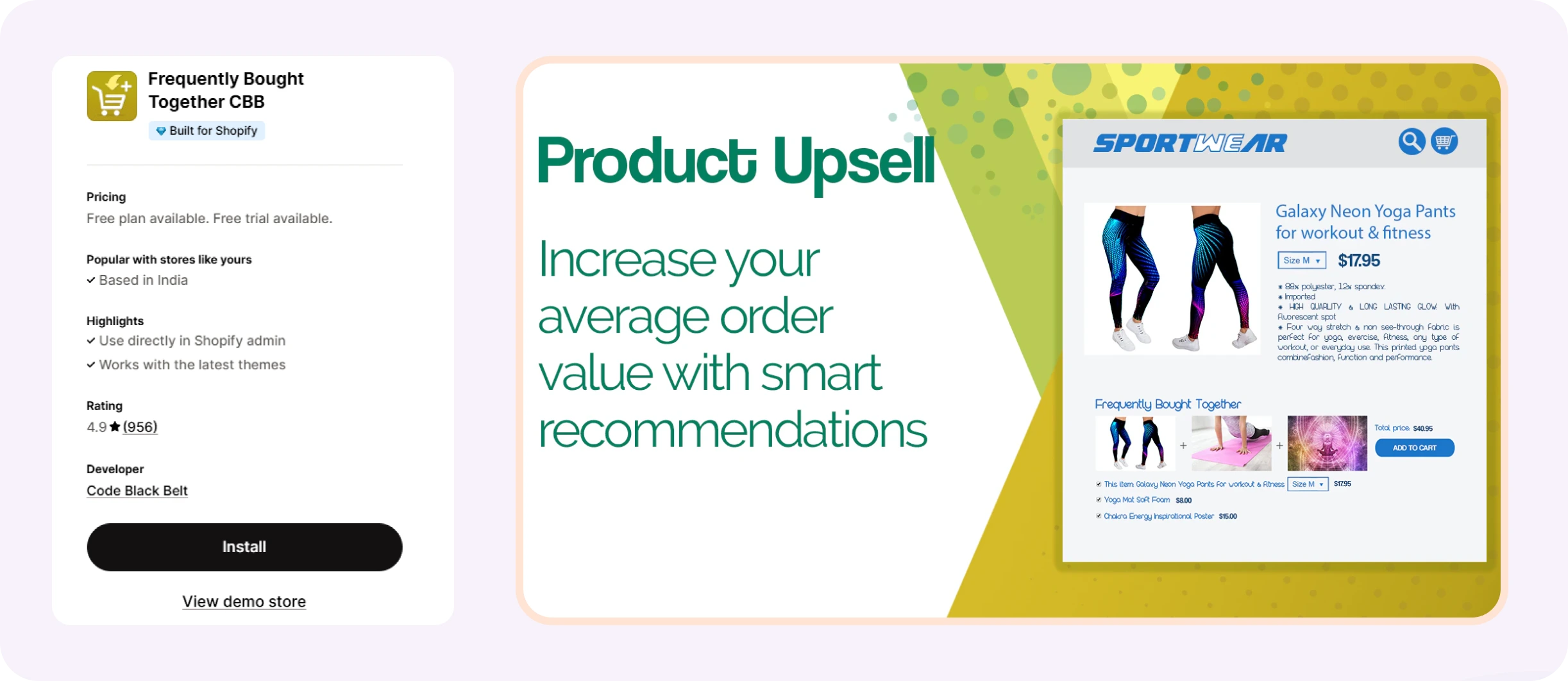
Frequently Bought Together — Best for Quick Product Page Bundling
Frequently Bought Together brings Amazon-style bundle suggestions to your product pages with no development required and no learning curve. It works with most Shopify themes out of the box and is the simplest option on this list. Less flexible for post-purchase or checkout offers, but for merchants who want quick wins on the product page without overcomplicating their stack, it delivers results fast.
Best for: Merchants new to cross-selling who want quick, no-dev-required results. Starts at $19.99/month.
Upselling to Subscribers: Why the Rules Are Different
Every scenario covered so far assumes you are selling to a one-time buyer. If you run a subscription programme, the logic shifts in ways that most upsell content never addresses.
Existing subscribers are already bought in. They trust your brand, they have given you their payment details, and they are expecting to hear from you. That makes them your most valuable upsell audience by a significant margin. And yet most merchants treat the customer portal as nothing more than a place to skip, pause, or cancel.
The opportunity looks different depending on your vertical. A skincare subscription brand can offer subscribers a one-time addition of a new serum to their next order, surfaced inside the portal with no new checkout required. A coffee subscription brand can offer a flavour upgrade or a move to a larger bag tier when the subscriber’s next renewal is approaching. A pet food brand can cross-sell a complementary supplement in the week before a subscriber’s next delivery.
These moments convert at significantly higher rates than cold product page upsells because the relationship is already established.
There is also a retention dimension worth understanding. Research shows most subscription drop-off happens in the first 90 days, and giving subscribers a reason to engage during that window, whether through a personalised offer, a product upgrade, or a complementary addition, directly reduces early cancellations. An upsell in the subscriber portal is not just a revenue moment. It is a retention moment.
The app you use to upsell one-time buyers may not be the right tool for upselling your subscribers. That distinction is worth making before you commit to a platform.
How to Choose the Right Upsell App for Your Store
With five strong options available, the decision comes down to four practical criteria. Work through these before committing to a platform.
Match App Complexity to Your Store’s Stage
Early-stage stores benefit most from simple, plug-and-play tools. Frequently Bought Together and ReConvert will deliver results without weeks of setup and without needing large volumes of order data to function properly. As your store scales and accumulates enough order history for AI recommendations to work meaningfully, Rebuy becomes the stronger long-term choice. Buying a complex personalisation platform before you have the data to feed it is one of the most common mistakes growing stores make.
Pick Your Primary Placement Before You Pick an App
Different apps own different moments in the funnel. AfterSell and Zipify own the post-purchase window. Rebuy owns full-store personalisation. Frequently Bought Together owns the product page. If checkout is your priority, pairing your upsell app with the right checkout optimization tools makes a measurable difference. Know where your customers are most receptive to an offer, then choose the app strongest at that specific placement. A/B testing capability matters here too. ReConvert and Rebuy both have built-in A/B testing, which means you can optimise placement and offer language without a separate tool.
Check Subscription Compatibility Before Committing
If you are running subscriptions through Recharge, verify that your upsell app integrates cleanly before signing up. Rebuy has the most developed Recharge integration and can surface subscriber-specific offers based on billing cycle and order history. ReConvert also integrates with Recharge for post-purchase flows. If growing recurring revenue is the goal rather than just one-time AOV, this check is non-negotiable.
Budget for What You Will Actually Use
Upsell app pricing scales with revenue or order volume across most of the options on this list. Start with the core placement that matters most to your store, prove the return at that single touchpoint, then expand into additional placements and higher tiers. Paying for features you have not configured delivers no return regardless of how strong the app is.
Upsell Strategies That Feel Helpful, Not Pushy
The mechanics of upselling matter less than the mindset behind them. Here is what separates upsell and cross-sell strategies that feel helpful from ones that feel like pressure.
Stay inside the customer’s intent. A coffee brand upselling a larger bag size at checkout will consistently outperform one upselling an unrelated product. The closer the offer is to what the customer already decided to buy, the higher it converts.
Limit to one or two offers per step. Decision fatigue is real. More than two options at any point in the funnel reduces conversion, not just on the upsell but on the original purchase too.
Upsell value, not just price. A 20 to 30% price increase converts when the customer understands what they are getting for it. Above that, the upgrade needs a clear and visible reason, better ingredients, a larger quantity, a more convenient format.
Use your subscribers as a test group. Before rolling out a new cross-sell offer across your full store, test it on your subscriber base first. Higher trust produces a cleaner signal on whether the offer is genuinely relevant.
Track LTV, not just order size. Monitor whether your upsell offers are increasing customer lifetime value over time, not just the value of individual orders. A subscriber who upgrades their plan is worth significantly more than a one-time buyer who adds a single item to their cart. Use your app analytics alongside Shopify reports to track both metrics separately.
Before You Pick an App, Think About Retention
The best upsell app in the world will not protect a subscription programme with high churn. If you are converting one-time buyers into subscribers through smart post-purchase offers, the next question worth asking is whether those subscribers are actually staying.
Without active retention work, a meaningful portion of the subscribers your upsell flows are generating will be gone within 90 days. Up to 20 to 40% of that loss comes from involuntary churn, failed payments that could have been recovered with the right tools in place.
Upselling gets subscribers through the door. Customer retention keeps them there. The two strategies need to work together, or you are spending money acquiring subscribers you cannot hold onto.
That gap between acquisition and retention is exactly what DriftCharge is being built to close, giving Shopify subscription merchants the tools to keep the subscribers their upsell flows are generating.
FAQs
What is the difference between upselling and cross-selling on Shopify?
Upselling shows a customer a better version of what they are already buying – higher quality, larger size, or a premium tier. Cross-selling suggests a complementary product alongside their purchase. Upselling increases the value of the item. Cross-selling increases the number of items in the order. Both raise AOV but work best at different funnel stages.
Where should I place upsell and cross-sell offers on Shopify?
Product pages and post-purchase thank-you pages offer the highest intent with the least friction for most stores. Cart upsells work once you have enough order volume for relevant recommendations. For Shopify Plus merchants, in-checkout upsells are worth testing, but keep them minimal so they don’t interrupt the sale. For subscription brands, the subscriber portal is the most overlooked and often highest-converting placement available.
What is a one-click upsell on Shopify?
A one-click upsell is an offer shown after checkout that a customer can accept without re-entering their payment details. Because the friction of payment is already gone, acceptance rates are significantly higher than product page or cart offers. For subscription brands, a one-click post-purchase offer converting a one-time buyer into a subscriber is one of the highest-value moments in the entire customer journey.
What is the best Shopify app for post-purchase upsells?
AfterSell and Zipify OCU are the strongest options for post-purchase upsells. AfterSell owns the thank-you page experience and works well for subscription brands, converting one-time buyers after their first order. Zipify OCU is built for one-click offers that appear before the order is fully confirmed, with no re-entry of payment details. For Shopify Plus merchants, Zipify also unlocks in-checkout upsells at no additional cost.
Do Shopify upsell apps actually increase average order value?
Yes, when offers are relevant and well-timed, they consistently increase AOV. Track results by comparing the average order value before and after using your app’s analytics alongside Shopify reports. For subscription brands, also track whether upsell offers are converting one-time buyers into subscribers, as that conversion impacts customer lifetime value far more than a single AOV increase ever will.
One-time upsells boost a single order. Subscription upsells boost every order for months. Driftcharge lets you offer one-time add-ons and product swaps at checkout and post-purchase, natively inside Shopify. Just more revenue per subscriber, every renewal.

Ganesh Pawar

Join the waitlist now
Limited early access. Early joiners receive additional discounts on premium features.
Discover how